
Colocation Data Center: Learn how it supports business growth.
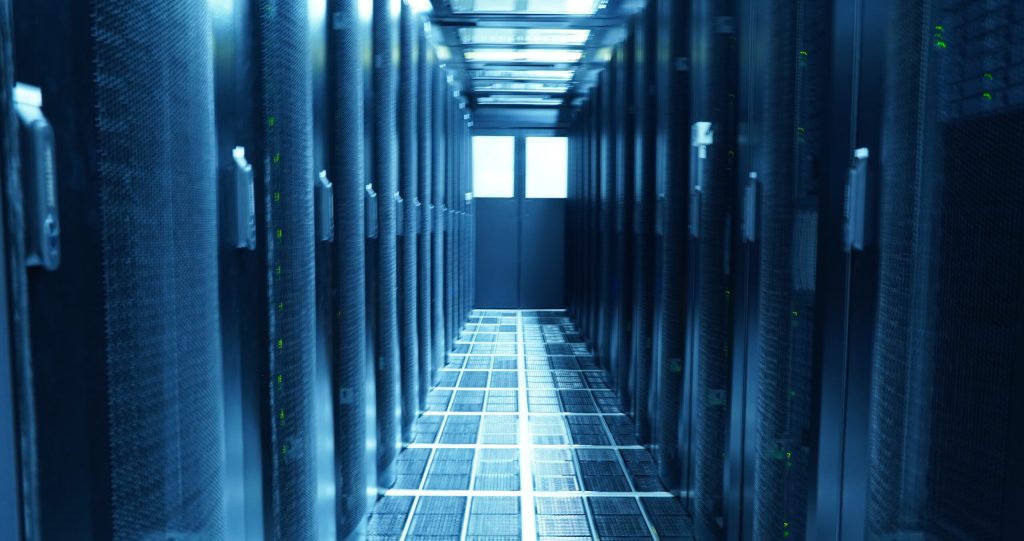
Resilience and security are two factors that are gaining prominence in the corporate world, especially when it comes to the IT sector. In this sense, Colocation Data Center is a service that helps precisely in implementing a robust and efficient data infrastructure.
While in the past companies relied on a data center installed in their offices, today this equipment can be located in independent buildings managed by specialized providers. At the same time, companies that are beginning to build their IT infrastructure can also benefit from this alternative, creating an architecture suited to their needs.
However, to choose the best strategy for your business, you first need to understand the service itself and the advantages it offers. To that end, in this article, we explain:
- What is colocation?
- How does a Colocation Data Center work?
- The key difference between Colocation and other Data Center models
- Benefits that the solution brings to organizations in a wide variety of sectors.
Follow along and enjoy the reading!
What is colocation?
Co-location, Colocation, or Housing: although it can be called (or written) in various ways, it basically consists of renting physical space to house the machinery necessary for maintaining a data infrastructure. In some locations, such as Brazil and other Latin American countries, the term Colocation is most commonly used; in others, such as Germany, Spain, and Portugal, Housing is the more common term.
Thus, in general, the concept deals with the allocation of hardware, such as private servers and network equipment, in a dedicated and outsourced building. In other words, it consists of removing these machines from the office (a model known as a Traditional or On-premise Data Center ) and installing them in a rented space, entirely dedicated to this purpose.
Colocation Data Center
Therefore, a Colocation Data Center (which can also be called a Colocation Center, a Colocation Data Center, or even a 'Carrier Hotel') is simply a building designed, constructed, and maintained independently by a specialized provider – such as ODATA , for example – exclusively to perform the function of a Data Processing Center.
In this way, companies of all sizes and sectors can contract, as a service, the hosting of multiple servers, in different modalities that meet the specific needs of each organization. To this end, the Colocation Data Center offers essential resources for the equipment to function properly, such as racks, cabinets, cages, or entire rooms, depending on the demand.
In the Colocation building, a complete infrastructure is offered that is natively prepared to receive clients' servers, which includes cleaning services and cooling systems to prevent overheating. In turn, in addition to the facilities themselves, they utilize data storage devices and the network bandwidth available in the Data Center, interconnecting with various telecommunications providers and other network services.
Furthermore, the Colocation Data Center also offers multiple connectivity options and high-standard security, as well as redundant power supply. These are elements that, if maintained in the office, represent high monthly operational costs.
Furthermore, this solution typically provides a 24/7 IT support team to handle maintenance, upgrades, and problem prevention.

Responsibilities of the Colocation Data Center provider and contractor
Although it may vary depending on the service contracted, generally speaking, the colocation service provider is responsible for providing the infrastructure, and the client is responsible for the hardware.
For example, while the equipment is located in monitored environments and undergoes constant maintenance, if there are problems with the parts themselves, the responsibility for repair or replacement lies with the client.
On the other hand, ensuring that these devices are correctly connected to power sources and the internet network, as well as protecting them from access by unauthorized persons, is the responsibility of the Colocation Data Center service provider.
Today, with the expansion of services, Managed Colocation solutions already exist. In this case, in addition to the aforementioned conveniences, there are specialized professionals who can take care of the server and existing applications.
READ MORE: Data Center: learn everything about this crucial business infrastructure
Colocation Data Center: a growth trend until 2025
Undeniably, the adoption of colocation by organizations of all sizes is on the rise, whether due to the growing number of users adopting remote work , the implementation of 5G , which demands more robust and stable network structures, or the increasing awareness among managers and end users of the importance of reducing their carbon footprint.
Additionally, the growing need to expand, relocate, or consolidate data centers to keep pace with this scenario is encouraging technology managers to adopt colocation services , aiming to reduce costs and increase reliability and operational security.
The speed at which this infrastructure needs to be migrated or implemented is becoming as important as placing it in the right environment. This is the idea behind the concept of 'just-in-time infrastructure', listed by Gartner as one of the top trends for 2022. And, in this sense, Colocation Data Centers stand out as one of the most qualified options.
Furthermore, the demand for a reliable, secure, and scalable data processing center is the main driving force propelling the global market. It is estimated that the Colocation Data Center sector will reach US$92 billion by 2025 , at a compound annual growth rate (CAGR) of 14,5%.
LEARN MORE: 10 myths and truths about remote data centers
Level of efficiency aligned with business needs.
In general, Colocation Data Centers can be categorized by their capacity and availability. Today, this organization occurs in layers known as 'Tiers', ranging from I to IV.
Thus, as the level increases, the redundancy of the infrastructure also increases. In practice, this means that there is a lower probability of downtime – or interruption of availability – even in critical cases, which makes Tier IV the most resilient.
Data Center Layers
- Tier I.Non-redundant power, cooling, and network connectivity;
- Tier II: At least some redundancy for power and cooling;
- Tier III: Capable of withstanding a 72-hour power outage;
- Tier IV: Capable of withstanding a 96-hour power outage.
However, this doesn't mean that the top-tier option is the most recommended for every business. To define the best data center model for your IT, you need to consider the company's focus, its sector, and daily operations. Only then will it be possible to decide on the ideal alternative with the best cost-benefit ratio.
READ MORE: How Colocation Helps Reduce Costs and Increase IT Availability
Colocation, hosting, and cloud: what are the differences?
With the acceleration of digital evolution and the changes it is causing in business models, it's good to pay attention to the different technologies available to compose the base infrastructure. Therefore, in addition to Colocation , we explain below two other services that are widely used today and which, when integrated, make up modern hybrid architectures:
Hosting
Hosting is very similar to colocation. For example, it also involves using a third-party data center. However, in this model, the client does not provide the hardware, but contracts it along with software licenses, environment administration, and specialized services.
It's also worth adding that, if the service contracted is Dedicated Hosting, in addition to other benefits, there is no sharing of resources with other clients.
This solution is generally widely used by entrepreneurs because it doesn't require the company to purchase a server and equipment. At the same time, it also places more responsibility in the hands of the provider, since they control and manage the entire infrastructure.
Both Dedicated Hosting and Colocation offer advantages, such as dedicated resources for the client. However, in the former, which covers the hardware layer and IT infrastructure, the monthly operating cost may be higher.
Cloud
Cloud computing environments offer infrastructure, just like other alternatives, that is contracted as a service. However, they do so through the cloud , instead of relying on physical assets. In the public cloud model, these facilities are shared, as in colocation, which provides cost savings. In the private cloud, there is exclusivity, but at a higher price.
In this data center service model, the provider manages servers, storage, and network elements. However, to keep pace with business growth in the cloud, it may be necessary to purchase more virtual storage space, which could eventually increase prices.
What is the best data center model?
In summary, data center models can be differentiated as follows:
- On-Premise: The company constructs the building, usually located on company premises. It also acquires the equipment and is responsible for the installation and maintenance of the entire structure.
- ColocationThe company provides the hardware, the provider takes care of all the infrastructure with space ideally designed to house the equipment;
- Hosting: The client is responsible for the application layer; all other services are managed by the third-party data center service provider.
- Cloud: The client pays for the capacity used; the provider supplies virtual management of servers, storage, and network elements.
In other words , to take advantage of the best benefits of each modality, investing in a hybrid architecture may be the best approach.
READ MORE: Colocation or Multicloud? The future of your Data Center is hybrid.
Discover the advantages of Colocation for businesses.
Even with the rise of digitalization, the reality is that many large organizations still prefer to maintain their own server. Therefore, Colocation Data Centers emerge as an ideal solution for maintaining this infrastructure in optimal conditions to foster business growth.
Among the main benefits of the service, we can highlight:
- Connectivity – offers higher levels of bandwidth. Hosting data hardware in a Colocation Data Center gives businesses access to a service of connectivity More stable, faster, and of better quality compared to a typical office server room, at a reasonable cost;
- Control – the client retains the use of their own equipment, in the same way as they did internally;
- Business – reduces costs related to the construction, maintenance, and upgrading of a traditional data center;
- Scalability Renting more space in a colocation facility is less expensive than building or expanding a data center.
- Redundancy – They offer greater protection against power outages, since they have multiple existing data backups and redundant power supply sources.
- Safety The colocation data center has strict physical security protocols, in addition to being able to offer cybersecurity protection.
READ MORE: Edge Computing: Learn how Colocation maximizes Data Center performance
ODATA Data Centers
Of Brazilian origin, ODATA is one of the most recognized data center service providers , dedicated to providing scalable, reliable, and flexible IT infrastructure in Latin America.
As a colocation services specialist, ODATA has been helping organizations at different stages of digital maturity develop a future-proof technology infrastructure.
To that end, their team of experts is always ready to provide a dedicated and secure environment, with redundant power, cooling, and ultra-connectivity tailored to the needs of each organization.
Thus, ODATA's clients have complete availability in their Data Centers, which helps them maximize business productivity. Colocation solutions range from high-density energy half-racks and cages for smaller environments to wholesale solutions.
LEARN MORE: ODATA Data Centers: expansion in Latin America to support the region's digital growth
Conclusion
To ensure business continuity and build a resilient operation, it is necessary to maintain an Information Technology (IT) infrastructure capable of supporting all demand. More than that, it must support all processes, aiding the company's growth, rather than being a barrier.
Furthermore, companies will increasingly implement new technologies, such as connected Internet of Things (IoT) devices, Big Data , or Artificial Intelligence solutions . These innovations, relevant to the data age we are living in, will consequently increase the volume of information generated and captured.
Similarly, the arrival of 5G will also affect this area of business, increasing the potential of resources already in use today.
As a result, it is undeniable that there will be a greater demand for data processing and storage. Therefore, colocation data centers should have an even greater presence in corporate strategies.
Want to boost your company's business results? Schedule a tour of one of ODATA's Colocation Data Centers and see what we can do for you.